Embarking on a digital marketing campaign can feel like navigating a bustling online city. With so many avenues and opportunities, it is easy to feel overwhelmed. But with a clear map and some helpful advice, you can confidently build a campaign that attracts your ideal customers, boosts your online presence, and helps your business thrive. This guide will walk you through the essential steps, offering practical insights to make your digital marketing efforts truly shine.
1. Understanding the Heart of a Digital Marketing Campaign
A digital marketing campaign is like a focused online effort to promote your business. It uses various digital tools such as search engine optimization (SEO), paid advertising, email, and social media to achieve a specific goal. This goal might be to attract new customers, expand your email list, increase sales, or simply make more people aware of your brand.
What truly sets a successful campaign apart is a well-thought-out strategy. Instead of simply posting content at random, an effective campaign brings everything together—including platforms, messaging, targeting, and timing—to create a clear journey for your audience to follow. It is about reaching the right people with the right message at exactly the right moment.
2. Setting Your Sights: Defining Goals and Understanding Your Audience
Before you launch any digital marketing activity, it's really important to know what you want to achieve. Setting clear goals and objectives helps everyone involved understand the campaign's purpose and what it needs to accomplish. These goals will guide your decisions at every stage, from selecting your digital channels to creating your content. A smart way to set these goals is by using the SMART framework: Specific, Measurable, Achievable, Relevant, and Time-bound. For example, instead of a vague goal like "increase website traffic," aim for something specific like "increase organic traffic to our new product page by 20% in the next three months."
Once your goals are clear, the next step is to understand who you're trying to reach. Your digital marketing strategy will only be effective if you know your target audience—the consumers most likely to be interested in your products or services. This means going beyond basic demographics like age or location. What are their interests? What problems are they trying to solve? What kind of content captures their attention? Creating detailed "buyer personas" can help you tailor your messages, choose the right platforms, and time your campaigns for maximum impact.
3. Choosing Your Digital Pathways: Selecting the Right Channels
With a clear understanding of your goals and audience, you can now pick the best digital marketing channels to connect with them. Digital marketing channels are online platforms you can use to reach your target audiences, such as social media, search engines, or websites. It's important to remember that your customers probably aren't just on one platform, so a multi-channel approach often works best, creating several touchpoints with your audience.
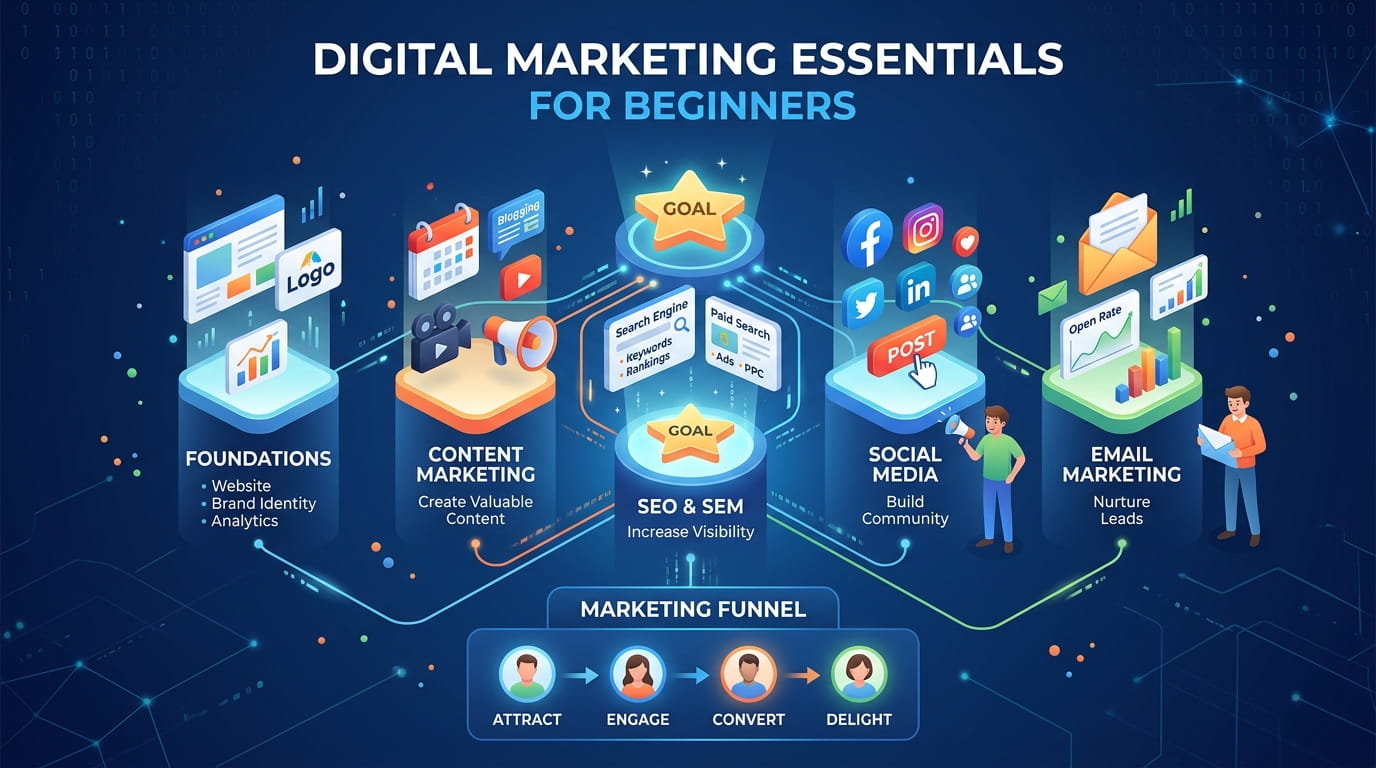
Some key digital marketing channels include: Search Engine Optimization (SEO) to improve your visibility on search engines; Pay-Per-Click (PPC) advertising for immediate, targeted traffic; Social Media Marketing to engage with customers and build brand awareness; Content Marketing to attract and engage your audience with valuable information; and Email Marketing to send targeted messages directly to subscribers. Consider your budget, goals, and where your audience spends their time online when making your selections.
Crafting compelling content means creating high-quality, relevant, and informative materials that resonate with your target audience. This can take many forms, including blog posts, how-to videos, infographics, e-books, or social media updates. The key is to focus on quality and relevance; your content should solve a problem, answer a question, or offer new insights.
Your content strategy should also include a plan for how you'll distribute and amplify your content to ensure it reaches your target audience. This means sharing it on various channels like your website, email newsletters, social media platforms, and even third-party publications. Consistency is also vital; using a content calendar can help you maintain a regular publishing schedule, which builds trust and keeps your brand top-of-mind.
5. Guiding Your Audience: Optimizing for Conversions
Getting traffic to your website or engagement on your social media is great, but the ultimate goal for most campaigns is to drive conversions—meaning getting people to take a desired action, like making a purchase, signing up for a newsletter, or filling out a form. Conversion Rate Optimization (CRO) is the practice of increasing the percentage of users who perform these desired actions.
There are several ways to optimize for conversions. Make sure your website navigation is simple and intuitive, and that your site is optimized for mobile devices, as many users access content from smartphones and tablets. Implement clear and compelling Calls-to-Action (CTAs) that tell users exactly what you want them to do. Adding "trust signals" like customer reviews and testimonials can also reduce hesitation and encourage action. Even small tweaks, like testing different headlines or button colors through A/B testing, can significantly impact your conversion rates.
6. Knowing What Works: Measuring and Analyzing Your Results
To truly understand if your digital marketing campaign is successful, you need to measure its effectiveness. This involves tracking and analyzing key performance indicators (KPIs) that align with your initial goals. Data alone isn't enough; the important part is knowing how to turn that data into actionable insights that help you understand what happened and create even more effective campaigns in the future.
Common metrics to track include conversion rate (the percentage of people who take a desired action), click-through rate (CTR), return on investment (ROI), return on ad spend (ROAS), and customer acquisition cost (CPA). Tools like Google Analytics can provide valuable insights into web traffic, user behavior, and conversion funnels. For social media, track metrics like likes, comments, shares, and brand mentions. Regularly reviewing these metrics will help you see what's working well and where improvements are needed.
7. Always Getting Better: Continuous Improvement and A/B Testing
Digital marketing is an ever-evolving field, so your campaigns should never be static. Continuous improvement is key to sustained success. This means regularly reviewing your data, looking for patterns and trends, and then making adjustments to your strategy. Social listening and feedback surveys are great ways to understand how your audience feels about your campaign.
A powerful tool for continuous improvement is A/B testing, also known as split testing. This involves creating two versions of a specific element within your campaign—like an email subject line, a landing page design, or a call-to-action button—and showing each version to a different segment of your audience. By comparing the performance of "version A" and "version B," you can determine which one is more effective in driving your desired outcome. A/B testing removes guesswork, allowing you to make data-driven decisions that enhance user experience, increase conversion rates, and ultimately improve your marketing strategies.
Every successful digital marketing campaign needs a smart approach to budgeting. Your budget will influence which channels you can utilize and the scale of your efforts. It is essential to allocate resources strategically, focusing on the channels that offer the best potential return for your specific goals and target audience. For instance, some channels like organic social media and SEO can be low-cost for getting started, while paid advertising, though it can deliver fast results, requires a higher pay-per-click investment.
Before committing to a budget, consider auditing your existing digital marketing activities. This helps identify what has worked well in the past and where resources might have been misallocated. Remember to prioritize your goals and allocate funds accordingly. A well-structured budget ensures that every dollar spent contributes to your overall business objectives, allowing you to optimize spending and scale what truly works.
What is the difference between a digital marketing strategy and a campaign?
A digital marketing strategy is a broader, long-term plan that sets overarching goals for your online presence, often spanning months or years. A digital marketing campaign, on the other hand, is a focused, time-bound initiative designed to achieve specific, measurable goals that contribute to your larger strategy.
How do I know which digital marketing channels are right for my business?
The best channels depend on your specific business goals, target audience, and budget. Start by researching where your target audience spends their time online and consider which channels align best with your objectives, whether it's brand awareness, lead generation, or sales.
What are vanity metrics and why should I avoid focusing on them?
Vanity metrics are data points that might look good on the surface, like a high number of social media followers or page views, but don't necessarily correlate with your business's bottom line. It's important to focus on metrics that directly relate to your business goals, such as conversion rates, customer acquisition cost, or revenue generated.
How often should I analyze my campaign's performance?
Regular monitoring is crucial. Weekly monitoring can help you identify immediate issues, while monthly, quarterly, and yearly measurements allow for broader strategic adjustments and trend analysis. The specific frequency might also depend on the nature and duration of your campaign.
Key Takeaways
Clarity is Power: Start every digital marketing campaign with clear, SMART (Specific, Measurable, Achievable, Relevant, Time-bound) goals and a deep understanding of your target audience.
Strategic Channel Selection: Don't try to be everywhere at once. Choose the digital marketing channels that best align with your audience and objectives, and consider a multi-channel approach for broader reach.
Content is King (and Queen): Create valuable, relevant, and engaging content that solves problems or offers insights to your audience. Ensure your content is distributed effectively across chosen platforms.
Optimize Relentlessly: Focus on Conversion Rate Optimization (CRO) by ensuring clear calls-to-action, user-friendly website design, mobile optimization, and building trust.
Measure What Matters: Track key performance indicators (KPIs) that directly reflect your business goals, such as conversion rates, ROI, and customer acquisition cost, to understand the true impact of your efforts.
Embrace Continuous Improvement: Digital marketing is dynamic. Regularly analyze your results, be open to adjusting your strategies, and use A/B testing to make data-driven decisions that refine your campaigns over time.

 Alex Martun



 Alex Martun