Welcome to the digital age, a world powered by the Internet! This guide will take you on a journey to discover the incredible power of the Internet and how it has profoundly transformed communication, entertainment, education, and business. Get ready to explore the vast network that connects billions globally, changing the way we live, work, and interact.
Table of Contents
- Introduction: The Digital Revolution
- How the Internet Works: A Global Network
- The Internet's Impact on Communication
- The Internet's Impact on Entertainment
- The Internet's Impact on Education
- The Internet's Impact on Business
- Staying Safe and Secure Online
- The Future of the Internet
1. Introduction: The Digital Revolution
The Internet stands as one of humanity's most significant achievements, ushering in a digital revolution that has fundamentally reshaped our society. It's more than just a technology; it's a global phenomenon that has eliminated geographical barriers and provided instant access to a wealth of information and services. The continuous development of the Internet allows individuals to communicate across continents, shop from their homes, engage in online learning, work remotely, and conduct financial transactions with unprecedented ease.
This pervasive network has become an indispensable part of our daily existence, touching nearly every aspect of our lives. From the way we connect with loved ones to how we access news, manage our finances, and pursue hobbies, the Internet has integrated itself seamlessly into the fabric of modern life. Understanding its core components and far-reaching effects is key to navigating and leveraging the digital world effectively.
2. How the Internet Works: A Global Network
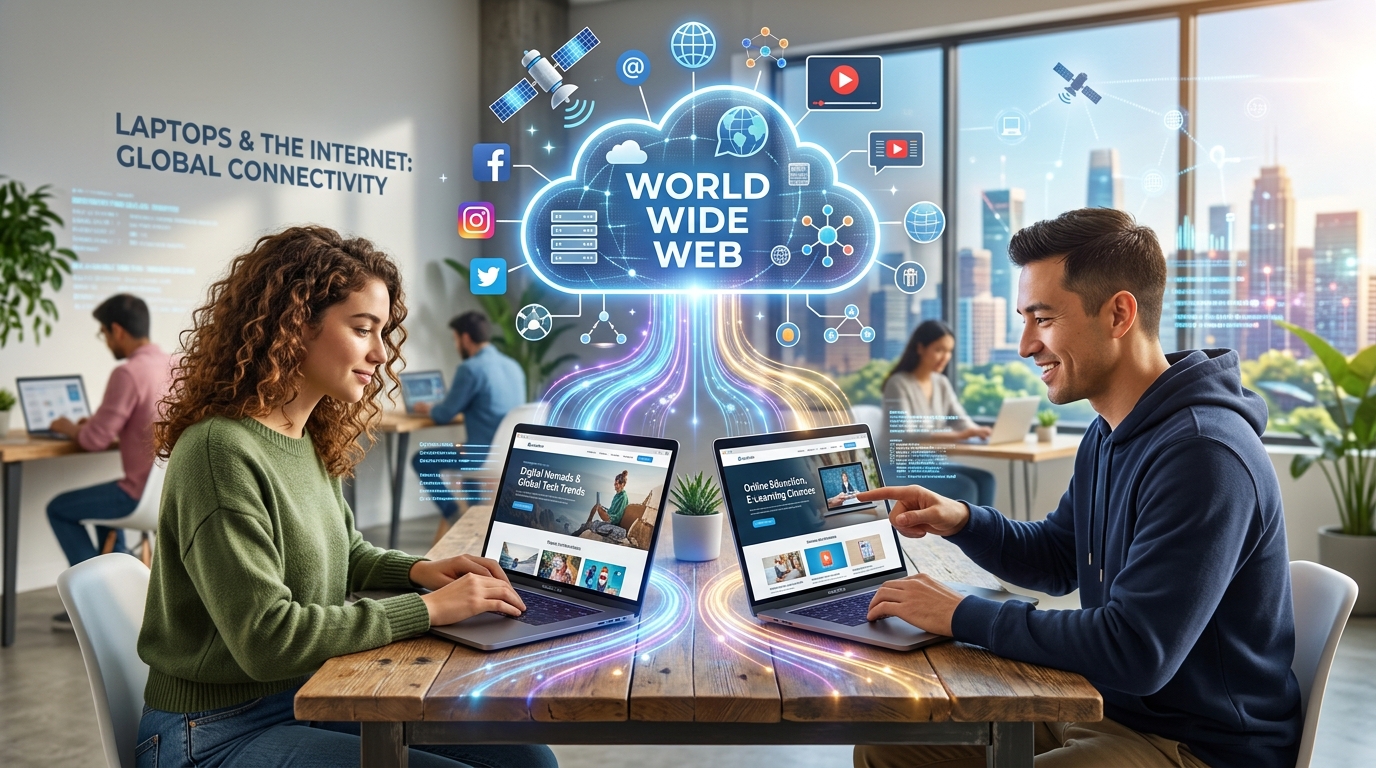
At its core, the Internet is a vast, interconnected global network of computers and devices that exchange information. Imagine it as a massive postal system for the entire world, where each computer acts as a post office, sending and receiving "letters" of data. These connections are a complex mix of physical cables, such as fiber-optic lines, and wireless radio connections, creating a sprawling infrastructure that spans the globe. When you go online, your device connects to this network, typically through an Internet Service Provider (ISP) via Wi-Fi or a wired connection.
The magic of the Internet lies in how information travels. When you visit a website or send an email, your request is broken down into small chunks called "packets." Each packet contains routing information, much like an address on an envelope, guiding it through various routers until it reaches its destination server. The Domain Name System (DNS) acts like an Internet phone book, translating human-readable web addresses (URLs) into numerical IP addresses that computers understand, ensuring your data reaches the correct location. This entire process happens in a fraction of a second, demonstrating the incredible efficiency and speed of the Internet.

The Internet has revolutionized communication, transforming how we interact with friends, family, and colleagues worldwide. Gone are the days when connecting with someone on the other side of the globe required letters, faxes, or telegrams. Today, we can communicate instantaneously through emails, instant messaging, and video calls, bridging geographical distances effortlessly.
Social media platforms have further amplified this transformation, enabling us to share ideas, news, and experiences with a global audience in real-time. While these tools foster unprecedented connectivity and allow for immediate expression, it's also important to acknowledge potential downsides, such as the rapid spread of misinformation and, in some cases, a decrease in face-to-face interactions. Despite these challenges, the Internet remains a powerful tool for strengthening social bonds and facilitating global dialogue.
4. The Internet's Impact on Entertainment
The landscape of entertainment has been dramatically reshaped by the Internet, offering an unparalleled array of options for leisure and enjoyment. Streaming services have become a cornerstone of modern entertainment, providing on-demand access to a vast library of movies, TV shows, and music. Users can now curate their own entertainment experiences, watching what they want, when they want, without the constraints of traditional broadcasting schedules.
Beyond passive consumption, the Internet has fostered a vibrant digital culture, particularly through online gaming and user-generated content platforms. Online gaming connects players globally, creating immersive virtual worlds and competitive communities. Similarly, platforms like YouTube and TikTok empower individuals to create and share their own content, from tutorials and vlogs to comedic sketches and artistic performances, turning everyday users into creators and entertainers.
5. The Internet's Impact on Education
Education has experienced a profound revolution thanks to the Internet, making knowledge more accessible and learning more flexible than ever before. Online courses, digital libraries, and a plethora of educational resources have broken down the traditional barriers of classrooms, allowing individuals to pursue learning opportunities from anywhere in the world. This democratization of knowledge means that professional certifications and new skills can be acquired from the comfort of one's home, opening doors to endless learning possibilities.
Immersive e-learning platforms are transforming academic communities, providing accessible and relevant communication between instructors and students, as well as among learners themselves. The Internet not only serves as a platform for learning but also aids in managing academic journeys, offering assistance with coursework and providing tools that enhance understanding through interactive experiences, such as augmented reality simulations.

The Internet has become an indispensable engine for business operations, efficiency, and global reach. E-commerce platforms have redefined traditional retail, allowing businesses to connect with customers worldwide and offering consumers the convenience of shopping from anywhere, at any time. Digital marketing strategies leverage the Internet to reach targeted audiences, build brand awareness, and drive sales with unprecedented precision.
Furthermore, the Internet has facilitated the rise of remote work, enabling teams to collaborate across continents through video conferencing and shared digital documents. This flexibility has not only reduced operational costs but also expanded business relationships and fostered innovation. From researching market conditions and collecting data to managing employee information and facilitating financial transactions, the Internet provides the crucial infrastructure for businesses to thrive in the modern economy.
7. Staying Safe and Secure Online
While the Internet offers immense benefits, navigating its vast landscape safely and securely is paramount. Protecting your personal information is crucial. Always be cautious about sharing sensitive details like your full name, address, phone number, or passwords online, even with individuals you think you know. Scammers often impersonate others to gain access to private information. Setting strong, unique passwords for each account, ideally at least 15 characters long and mixing letters, numbers, and special characters, is a fundamental step in cybersecurity. Password manager software can help you manage these complex passwords.
Furthermore, be mindful of what you post on social media, as cybercriminals can use personal information to reconstruct passwords or answer security questions. Keeping your privacy settings on and being wary of suspicious links or unsolicited requests for money or private details are essential practices. Always ensure your internet connection is secure, especially when making online purchases, by looking for "https:" in the website address and a padlock icon. Regularly updating software and using antivirus programs also provides critical protection against security flaws and malware.

8. The Future of the Internet
The Internet is an ever-evolving entity, and its future promises even more transformative advancements. We are on the cusp of a new era defined by emerging technologies such as Artificial Intelligence (AI), Virtual Reality (VR), and Augmented Reality (AR). AI is already reshaping content creation and consumption, offering personalized experiences and automating tasks. The integration of AI and machine learning into network management is set to enhance global Internet connectivity, offering improved performance, reliability, and security.
By 2050, experts anticipate that traditional computers and phones may be replaced by immersive technologies, with users navigating the web through natural gestures, secure voice commands, or even direct brain-computer interfaces. The Internet of Things (IoT), where everyday objects are connected and communicate, will continue to expand, creating smarter homes, cities, and industries. With advancements in 5G connectivity offering higher speeds and lower latency, alongside developments in quantum computing and blockchain for enhanced security, the Internet of tomorrow promises to be faster, smarter, more interconnected, and profoundly immersive.
Frequently Asked Questions (FAQ)
Q: What is the difference between the Internet and the World Wide Web?
A: The Internet is a global network of interconnected computers and devices, the physical infrastructure. The World Wide Web, or simply "the web," is a system of interconnected documents and other web resources that are accessed via the Internet. In essence, the web uses the Internet to transmit its data.
Q: How do I get an Internet connection at home?
A: To get an Internet connection, you'll need to choose an Internet Service Provider (ISP). They will typically install the necessary equipment, such as a modem and a router, which then broadcasts a Wi-Fi signal in your home or allows for wired Ethernet connections.
Q: What is an IP address?
A: An IP address (Internet Protocol Address) is a unique string of numbers that identifies each computer or device connected to a network, much like a home address. It allows data to be sent and received accurately between devices on the Internet.
Q: How can I protect my privacy online?
A: You can protect your privacy online by using strong, unique passwords, enabling privacy settings on social media, being cautious about sharing personal information, avoiding suspicious links, and ensuring secure connections (HTTPS) when making online purchases.
Q: What are cookies?
A: Cookies are small text files stored on your device when you visit a website. They help websites remember information about you, like your login details or shopping cart contents, to provide a more personalized browsing experience.
Key Takeaways
- The Internet is a global network that has fundamentally transformed communication, entertainment, education, and business, making the world more interconnected.
- Information travels across the Internet in small "packets" through a network of routers and servers, guided by IP addresses and the Domain Name System (DNS).
- It has revolutionized communication by enabling instant global connections through email, messaging, and social media.
- The Internet provides diverse entertainment options, from streaming services to online gaming and user-generated content.
- Education has become more accessible and flexible through online courses, digital libraries, and e-learning platforms.
- For businesses, the Internet drives e-commerce, digital marketing, and facilitates remote work, expanding global reach and efficiency.
- Staying safe online requires strong passwords, cautious sharing of personal information, secure connections, and regular software updates.
- The future of the Internet will be shaped by AI, VR/AR, IoT, 5G, and quantum computing, leading to an even more immersive and intelligent digital world.

 Alex Martun

 Alex Martun