Snapchat Marketing Strategies That Work in 2026: Your Guide to Boosting Engagement and Audience Growth
Hey there, fellow marketers! Ever feel like keeping up with social media trends is a full-time job in itself? You're not alone! But when it comes to connecting with Gen Z and younger Millennials, one platform consistently stands out and continues to evolve: Snapchat. In 2026, Snapchat isn't just about ephemeral messages; it's a dynamic ecosystem ripe with opportunities for brands to foster genuine engagement, drive sales, and grow their audience naturally.
If you've previously written off Snapchat, it's time for a fresh look. The platform has undergone a remarkable transformation, becoming a powerful tool for visual-first communication and immersive advertising. Let's dive into how you can harness its unique features, creative tools, and vibrant community to make your brand shine this year!
Table of Contents
Introduction: Snapchat's Resurgence in 2026
Why Snapchat is a Must-Have for Marketers in 2026
Crafting Your Snapchat Marketing Strategy: The Foundation
Mastering Snapchat Stories for Organic Engagement
Unleashing the Power of Lenses and AR Experiences
Spotlight & Discover: Expanding Your Reach
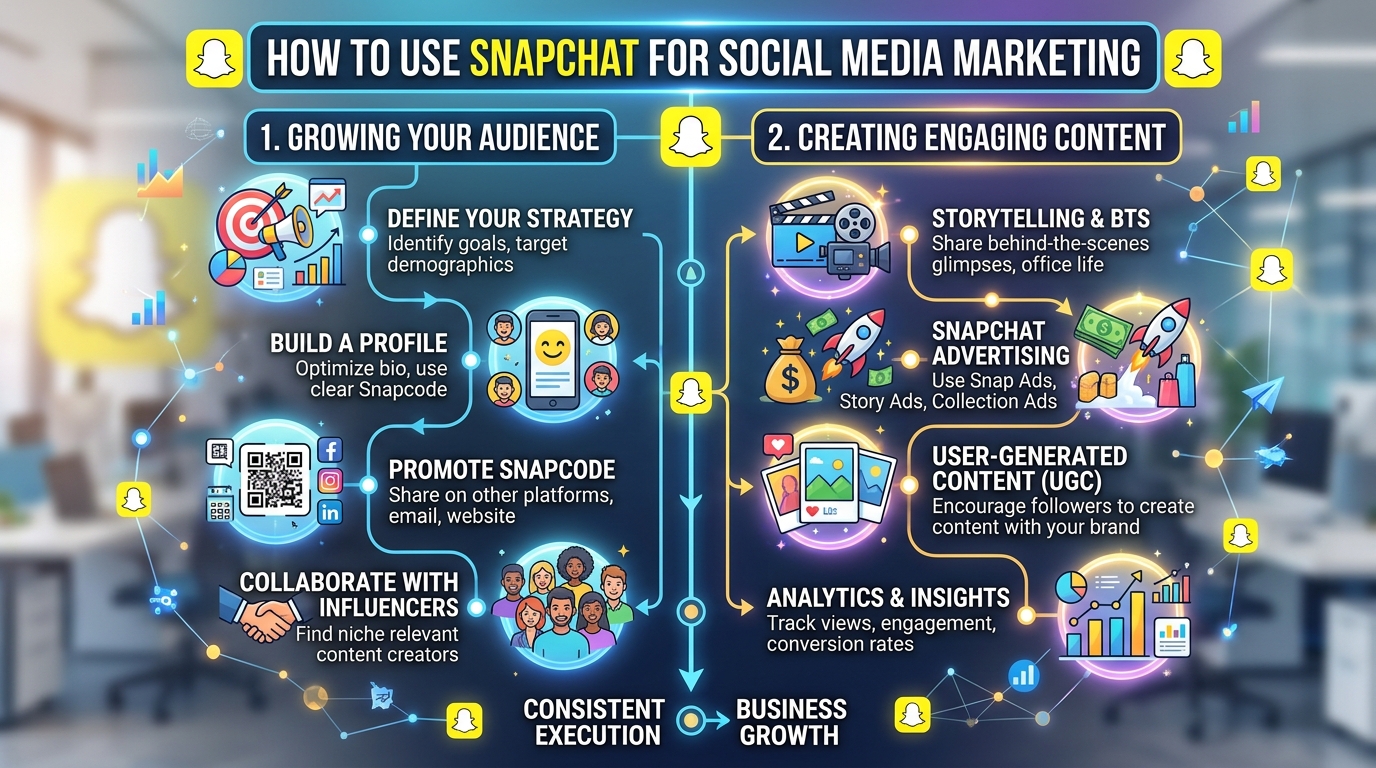
Strategic Influencer and Creator Collaborations
Navigating Snapchat Ads: Formats and Best Practices
Snapchat for E-commerce: Driving Direct Sales
Measuring Success: Snapchat Analytics and Optimization
The Future is Now: AI and Emerging Technologies
Frequently Asked Questions (FAQ)
Key Takeaways
1. Introduction: Snapchat's Resurgence in 2026
The narrative around Snapchat has shifted dramatically, moving past earlier questions about its long-term viability. Fast forward to 2026, and the platform is thriving, boasting over 900 million monthly active users as of 2025, with projections reaching nearly 1 billion by early 2026. This significant scale is driven by consistent growth, particularly in regions like India, Southeast Asia, and the Middle East.
Snapchat's continued popularity, especially among younger demographics, cements its position as a crucial channel for brands. It’s not just a messaging app; it’s a robust digital ecosystem where users spend an average of 38 minutes daily, with 18-24-year-olds logging an impressive 46 minutes per day. This sustained engagement highlights its role in daily communication and content consumption.
The platform's resilience is also evident in its financial performance, with Q1 2025 revenue growth at 14% year-over-year and direct sales generated through Snapchat ads reaching approximately $10 billion. This isn't just incidental revenue; it underscores Snapchat's core business case for advertising. For marketers, this means a dynamic and influential platform with a growing, highly engaged audience ready to interact with authentic brand experiences.
The platform is making aggressive bets on augmented reality (AR) and artificial intelligence (AI), which are fundamentally reshaping how brands can connect with their audience. These innovations, combined with a focus on immersive and personalized experiences, are key to its ongoing success and relevance in the fast-paced digital landscape.
If your target audience includes Gen Z and younger Millennials, Snapchat is an indispensable part of your marketing mix. The platform reaches 90% of 13-24-year-olds and 75% of 13-34-year-olds in more than 25 countries, making it incredibly effective for reaching these influential demographics. In 2026, roughly 60% of its global audience is aged between 13 and 24, with the fastest growth seen in the 13-17 age bracket in the Asia-Pacific region.
What sets Snapchat apart is the nature of engagement it fosters. Users primarily connect and share content with friends and family, opening the app over 30 times a day. This creates a less corporate, highly authentic environment where users are more receptive to brand interactions that feel natural and entertaining.
Snapchat users are also social shoppers, keen to share their purchases and shopping experiences, and are 60% more likely to make impulse purchases than users on other platforms. This makes it a powerful channel for driving direct sales and influencing purchase decisions, especially when coupled with interactive features. The platform's commitment to innovation, particularly in AR and AI, offers unique opportunities for brands to create truly immersive and memorable experiences.
Furthermore, even B2B marketers are finding value in Snapchat, with research indicating that Snapchat users are 1.5 times more likely to hold executive management positions and are often entrepreneurs seeking inspiration and new business solutions. This highlights the diversifying user base and the platform's potential beyond traditional consumer marketing.
Before diving into content creation, a solid strategy is essential. Your Snapchat marketing strategy should clearly outline your objectives, target audience, and how you plan to leverage the platform's unique features. Start by defining what you want to achieve, whether it's brand awareness, increased engagement, website traffic, lead generation, or direct sales.
Understanding your audience is paramount. Snapchat Insights, available through a Snapchat Business account, provides valuable data on demographics (age, gender, location), interests, and behaviors. Use this information to tailor your content and ensure it resonates with the right people. If you're targeting Gen Z, remember they value authenticity, interactive content, and brand experiences over heavily polished advertisements.
To unlock full marketing capabilities, your brand will need a public profile. This enables access to features like Spotlight, Subscriptions, and improved search visibility. If you plan to run ads, access analytics, or create AR Lenses, a Snapchat Business account is also necessary. Ensure your profile is optimized with a memorable username and a compelling bio that reflects your brand's personality.
Finally, your strategy should include a breakdown of the specific Snapchat features, filters, and functions your brand will utilize. Think about how these tools can help you tell your brand's story in a way that feels natural and engaging to Snapchat users, moving beyond traditional advertising approaches.
4. Mastering Snapchat Stories for Organic Engagement
Snapchat Stories are the platform's most versatile feature, offering short (up to a minute), vertical video or image Snaps that disappear after 24 hours. The key to successful Stories is keeping them casual, timely, and built around a strong hook. Users want authentic, in-the-moment content – think behind-the-scenes glimpses, unedited clips, and casual updates.
Consistency is crucial for Story engagement. Posting 5-10 snaps daily can keep your profile active and visible, and the algorithm often pushes fresh Stories to "For You" feeds. Incorporate interactive elements like polls, questions, and emoji sliders to encourage two-way conversations and participation. The more users engage, the more Snapchat prioritizes your content.
For long-lasting content, leverage Saved Stories (also known as Story Highlights). These allow you to pin select content to your public profile, so it doesn't disappear. Treat Saved Stories as your "About Us" section on Snapchat, showcasing evergreen content that helps new viewers quickly understand your brand. Brands like Bumble use Saved Stories to share valuable content like dating tips and brand values.
When creating Stories, remember to shoot vertically, use movement, varied camera angles, and point-of-view shots to keep content visually dynamic. Add captions, filters, frames, and music to match Snapchat's expressive style. For business accounts, you can also add swipe-up or tap-through links to drive direct action, such as website traffic or app installs.
Augmented Reality (AR) Lenses are at the heart of Snapchat's interactive appeal, with 75% of users engaging with AR daily. These interactive filters allow users to play with your brand in fun, immersive ways, becoming a core part of the platform's identity. The average Snapchat user interacts with a Lens for at least 20 seconds, and they are likely to share images or videos using the filter, turning branded content into promotional user-generated content (UGC).
Snapchat offers various AR mechanic types, including face lenses for virtual try-ons, world lenses that place 3D objects in the user's environment, and gamification lenses that incorporate interactive challenges. These can significantly boost engagement, brand recall, and even purchase intent, with some brands reporting a 34% lift in purchase intent among users who engaged with shoppable AR try-on experiences.
A major game-changer for 2026 is the emergence of Sponsored AI Lenses, powered by Snapchat's generative AI technology. These ads create personalized, AI-driven images that place users at the center of unique brand moments without requiring extensive production. For instance, Gucci partnered with Snapchat for its first Sponsored AI Lens, transforming users into characters from its new collection, providing an immersive storytelling method.
To build your AR commerce strategy for 2026, identify AR-suitable products (like try-on categories for cosmetics or fashion), partner with Lens creators (there are over 350,000 globally), optimize the AR experience for commerce with clear pricing and product info, and measure its impact by tracking engagement and swipe-up rates. Snapchat's Lens Studio also allows for custom AR creation, enabling brands to build highly engaging, interactive camera experiences.
6. Spotlight & Discover: Expanding Your Reach
Beyond individual Stories, Snapchat offers powerful features like Spotlight and Discover to broaden your content's reach. Spotlight is Snapchat's answer to scrollable short-form video, similar to other popular platforms. Public profiles can submit video Snaps to Spotlight, providing an opportunity to expand reach without an additional budget.
Content that performs well on Spotlight tends to feature relevant trends, leads with personality, and fits Snapchat's casual tone. It's also a great place to repurpose vertical content that has performed well on other networks (just remember to remove watermarks). Aim for clips under 60 seconds that use trending audio, effects, or challenges to increase virality. If your video is selected, it appears on the Spotlight feed, giving your brand a credibility boost and wider exposure.
Discover, on the other hand, is Snapchat's curated content feed featuring Stories from media partners, creators, and sponsored brand content. It’s personalized to each user's interests, offering a prime spot for visibility. While organic Stories from public profiles don't appear in Discover, your brand's Snap Ads and Sponsored Stories can, placing your content alongside trusted creators.
Leveraging these features requires a keen eye on current trends. Use the Discover's "Trending" tab for inspiration, and remember that lo-fi, authentic, and in-the-moment content often resonates best. By consistently creating engaging content tailored for these sections, you can significantly increase your brand's visibility and attract new followers naturally.
7. Strategic Influencer and Creator Collaborations
Influencer marketing remains a potent strategy on Snapchat in 2026. Tapping into built-in audiences and leveraging creators' credibility can be highly effective, especially with younger users. The 2025 State of Influencer Marketing Report found that 86% of consumers make a purchase inspired by an influencer at least once a year, with Gen Z being the most influenced.
Snapchat's environment, built around close relationships and day-to-day communication, makes creator content feel less disruptive and more authentic. When brand-sponsored creator content feels genuine, Snapchatters are 66% more likely to feel excited about the brand. Creator ads are even played 25% longer and drive 16% more active attention than standard branding ads.
There are various tiers of influencers to consider for collaborations:
Mega-Influencers (500K-5M+ followers): Best for product launches and broad brand awareness campaigns.
Macro-Influencers (50K-500K followers): Ideal for targeted demographic reach and lifestyle integration.
Micro-Influencers (10K-50K followers): Offer cost-effective campaigns with high engagement rates and niche community connections.
Nano-Influencers (1K-10K followers): Great for community building and amplifying user-generated content, often through free products or small partnerships.
Consider innovative collaborations like Snapchat takeovers, where a creator posts directly from your brand's account, or co-creating custom AR Lenses. The "Dungeons & Dragons 'Honour Among Thieves'" campaign, which featured a custom Snapchat Lens for character selection, is a great example of an AR collaboration that felt native to fan culture and generated unprecedented engagement.
8. Navigating Snapchat Ads: Formats and Best Practices
Snapchat ads are full-screen, mobile-first ads that appear across Stories, Spotlight, Chat, and AR surfaces, offering multiple ways to reach a highly engaged audience. With ad costs potentially more competitive than other platforms, and 64% of Snapchatters watching ads with sound on, it presents a unique opportunity for marketers.
Here are some common ad formats and their applications:
Snap Ads: The most common format, these are full-screen vertical video or image ads that appear between user Stories, in Discover, or Spotlight. They are typically short (under 10 seconds recommended) and can include swipe-up links for calls to action.
Story Ads: These feature a branded tile in the Discover section, leading users to a collection of ads or a longer branded Story experience. They are great for product discovery and brand storytelling.
Collection Ads: An e-commerce powerhouse, these showcase multiple products in an interactive, shoppable experience, displaying up to four products in a single ad.
Commercials: These are premium, unskippable video ads (up to 6 seconds) that can run up to 180 seconds in curated content. They are best for key messages and driving brand awareness.
Dynamic Ads: These personalize ads for customers using your product catalog, Snap Pixel, or a mobile measurement app.
Sponsored Lenses/Filters: These are AR experiences that users can apply to their photos/videos, excellent for brand awareness, engagement, and viral moments.
When creating ads, keep them short, use motion, bold text, and vertical design, and include a clear call to action (CTA) early in the ad. Lo-fi, user-generated content (UGC) style ads often outperform studio-shot videos by nearly 40% on Snapchat, as they feel more authentic. Utilize Snapchat's Ad Manager for precise targeting based on location, interests, demographics, or behaviors, and consider goal-based bidding to optimize for specific objectives like purchases or leads.
9. Snapchat for E-commerce: Driving Direct Sales
Snapchat has become a significant driver of direct sales, with its ads contributing approximately $10 billion in direct sales. This makes it an invaluable platform for e-commerce businesses looking to connect with a highly engaged, often impulse-driven audience.
One effective strategy is to capitalize on urgency. Snapchat's ephemeral nature (Stories disappear after 24 hours) can be used to promote limited-time offers and exclusive coupon codes for Snapchat users. This exclusivity creates a sense of immediacy, encouraging quicker purchase decisions. You can showcase products in Snaps, demonstrate their benefits, and end with a clear call to action and a direct link to your product page.
Collection Ads are particularly effective for e-commerce, allowing you to showcase multiple products in a shoppable experience. Snapchatters are 34% more likely to purchase products discovered on Snapchat, and 35% send snaps of products they're interested in buying, indicating a strong shopping intent on the platform. Snapchat's retargeting capabilities, though underutilized by many, also present a huge opportunity for brands.
AR Commerce is rapidly transforming the e-commerce landscape on Snapchat. Over 100 million users regularly engage with AR shopping features, and 63% make purchases after discovering products via AR. AR lenses capture twice as much attention as conventional digital content and can deliver a 34% lift in purchase intent compared to standard video ads. By creating interactive AR try-ons for cosmetics, fashion, or even furniture, you can reduce friction between exploration and purchase, providing clear product information within the lens itself.
10. Measuring Success: Snapchat Analytics and Optimization
To truly master Snapchat marketing, you need to understand what's working and what isn't. Snapchat analytics provide crucial performance and audience data across your Stories, Spotlight, and Public Profile. These metrics help you move from "post and pray" to making intentional, data-driven decisions.
Snapchat Insights, the app's built-in analytics hub, offers an overview of content performance and audience data. Key metrics to monitor include:
Story Views: The total number of times your Stories have been viewed.
View Time: How long users are watching your content.
Completion Rates: The percentage of viewers who watch your entire Story. High drop-off rates indicate content that needs refinement.
Screenshots: A strong indicator of content value and engagement, as users deem it worthy of saving or sharing.
Audience Demographics: Insights into the age, gender, location, and interests of your viewers, helping you confirm if you're reaching your target audience.
Follower Growth Rate: More important than total follower count, this indicates the effectiveness of your growth strategies.
Story Views per Follower: Reveals content quality; healthy accounts see 30-50% of followers viewing Stories regularly.
For ad campaigns, Snapchat Ads Manager provides detailed reporting, allowing you to track metrics like cost per follower, swipe-up rates, and conversion rates. Snapchat's machine learning needs data to optimize, so it's recommended to let new ad sets run for at least 4 days before making significant changes. Regularly test different creative approaches, calls to action, and targeting options, changing one variable at a time to identify what works best.
11. The Future is Now: AI and Emerging Technologies
Snapchat is actively investing in cutting-edge technologies like AI and AR, which are shaping its future and presenting unprecedented opportunities for marketers. The integration of AI is making content creation and personalization more accessible and impactful.
AI-Powered Lenses are a prime example. As seen with Gucci's "La Famiglia" Lens, generative AI allows for personalized, dynamic AR experiences that users can interact with, without extensive manual production. This technology can generate variations in real-time, offering personalization at scale and higher engagement due to the perceived uniqueness of the experience. Snapchat continues to invest in AI tools to empower teams of any size to produce premium ad creatives, democratizing access to sophisticated marketing.
Beyond lenses, Snapchat is integrating AI-Powered Infrastructure and Conversational Search. A significant partnership with Perplexity AI is set to integrate conversational search directly into Snapchat Chat in early 2026. This means brands can be discovered through natural language search within the app, making organic visibility more crucial than ever. It also positions Snapchat as an infrastructure for AI companies seeking mobile-native audiences.
Furthermore, Snapchat is looking towards the future with Augmented Reality Glasses ("Specs"), expected to launch in 2026. This represents the ultimate evolution of the brand, moving from a screen-based app to wearable AR infrastructure. While still emerging, these developments suggest a future where AR experiences become even more seamlessly integrated into daily life, offering brands entirely new canvases for engagement. Marketers who stay ahead of these trends will be well-positioned to capitalize on the next wave of immersive brand experiences.
12. Frequently Asked Questions (FAQ)
Q1: Is Snapchat still relevant for marketing in 2026?
A: Absolutely! Snapchat has over 900 million monthly active users and continues to grow, especially among Gen Z and younger Millennials. Its unique focus on authentic, ephemeral, and immersive content makes it highly relevant for engaging these key demographics.
Q2: What's the best way to grow my audience on Snapchat naturally?
A: Focus on creating consistent, engaging, and authentic Stories and Spotlight content. Use interactive features like polls and questions, cross-promote your Snapcode on other platforms, and collaborate with micro-influencers. Optimizing your Public Profile for discovery is also crucial.
Q3: How effective are Snapchat Lenses and AR for marketing?
A: Highly effective! 75% of Snapchat users engage with AR daily. AR Lenses can lead to longer user interaction times (average 20+ seconds), increased brand recall, and a significant lift in purchase intent (up to 34% for shoppable AR try-ons). AI-powered lenses are also making personalized AR experiences more accessible.
Q4: What kind of content performs best on Snapchat?
A: Lo-fi, authentic, and in-the-moment content, such as behind-the-scenes glimpses, quick tips, and humorous Snaps, performs exceptionally well. Vertical video, short, snappy messages, and interactive elements (polls, quizzes) are also key. Content that feels native to the platform and encourages participation will always stand out.
Q5: What are the main advertising options on Snapchat for businesses?
A: Snapchat offers various ad formats, including Snap Ads (single image/video), Story Ads, Collection Ads (for e-commerce), Commercials (unskippable video), Dynamic Ads (personalized product ads), and Sponsored Lenses/Filters (AR experiences). These can be targeted using Snapchat's Ad Manager based on demographics, interests, and behaviors.
Key Takeaways
Snapchat is flourishing: With nearly a billion monthly active users and strong engagement among Gen Z and Millennials, Snapchat is a powerful and growing platform for marketers in 2026.
Authenticity is paramount: Users prioritize real, unpolished, and in-the-moment content. Embrace a casual, conversational tone in your Stories and Snaps.
Embrace Immersive Experiences: AR Lenses, especially AI-powered and shoppable ones, are a game-changer for engagement and driving purchase intent. Over 75% of users engage with AR daily.
Leverage All Features: Don't just stick to Stories. Explore Spotlight for wider organic reach and Discover for paid visibility. Utilize interactive elements to foster two-way conversations.
Strategic Collaborations are Key: Partner with creators and influencers, particularly micro-influencers, to tap into trusted communities and drive authentic engagement.
Smart Ad Strategies Pay Off: Utilize diverse ad formats like Collection Ads and Dynamic Ads, optimize creative for mobile-first, and use goal-based bidding for effective campaigns.
Measure and Adapt: Regularly use Snapchat Insights to track performance metrics, understand your audience, and refine your content and ad strategies for continuous growth.
Look to the Future: Stay informed about Snapchat's advancements in AI (like conversational search) and AR hardware (Specs) to position your brand for future innovative marketing opportunities.

 Alex Martun

 Alex Martun