Understanding Quora's Ecosystem: What Makes it Unique?
Optimizing Your Quora Profile for Maximum Impact
Finding the Right Questions: Targeting Your Audience
Crafting High-Quality Answers: Providing Value and Authority
Beyond Text: Incorporating Visuals and Links Wisely
Leveraging Quora Spaces: Building Community and Influence
Driving Traffic Back to Your Platforms: Strategic Link Placement
Monitoring Performance and Adapting Your Strategy
Common Mistakes to Avoid on Quora
Success Stories and Best Practices
Sustaining Your Quora Presence for Long-Term Growth
FAQ
Key Takeaways
1. Introduction: The Power of Quora for Creators
Hey there, fellow creators! In today's bustling digital landscape, cutting through the noise and getting your valuable content seen can feel like a Herculean task. You're creating amazing things, but how do you connect with the people who need what you offer? That's where platforms like Quora come into play, offering a unique and powerful avenue for building your online visibility and reputation. It's not just another social media platform; it's a knowledge-sharing community brimming with opportunities.
Imagine a place where people actively seek answers to their burning questions – questions directly related to your niche, expertise, or products. Quora is exactly that: a giant, searchable library of user-generated questions and answers. For creators, this translates into a golden opportunity to position yourselves as authorities, share your insights, and, most importantly, connect with a highly engaged audience that is already looking for solutions.
The beauty of Quora lies in its intent-driven nature. Unlike many other platforms where you're trying to interrupt a user's scroll, on Quora, users are actively searching for information. When you provide a well-thought-out, helpful answer, you're not just contributing to a discussion; you're directly addressing a need, building trust, and showcasing your expertise to someone who is genuinely interested. This makes it an incredibly efficient way to reach potential clients, customers, or followers.
Whether you're a blogger, a consultant, a digital artist, a coach, or running an e-commerce brand, Quora offers a distinct advantage. It allows you to demonstrate your knowledge, cultivate a reputation for helpfulness, and subtly guide interested individuals back to your owned platforms where they can learn even more about what you do. Let's dive in and explore how you can harness this powerful platform to supercharge your online visibility.
2. Understanding Quora's Ecosystem: What Makes it Unique?
Before we jump into strategy, it's essential to grasp the unique DNA of Quora. At its core, Quora is a question-and-answer platform where users ask questions and other users provide answers. This might sound simple, but its depth lies in its commitment to quality, relevance, and community-driven content. It's less about fleeting trends and more about enduring knowledge, making your contributions long-lasting assets.
One of Quora's defining characteristics is its emphasis on expertise. While anyone can answer a question, answers from verified experts or highly upvoted answers from knowledgeable contributors tend to rise to the top. This system rewards genuine insights and well-researched information, meaning that putting effort into your answers directly translates into greater visibility for your profile and brand.
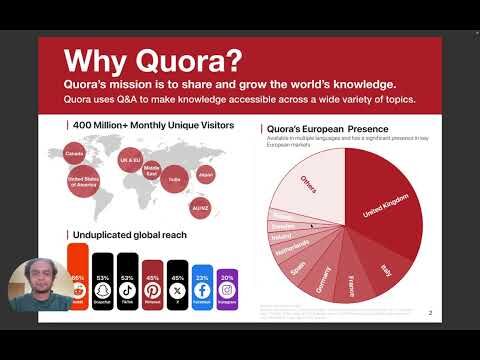
Another key aspect is its vast and diverse user base. Quora boasts millions of monthly unique visitors from around the globe, covering an incredibly broad spectrum of topics. This means that no matter how niche your area of expertise, there's a very high probability that people are asking questions about it on Quora. This audience is often more mature and looking for detailed, thoughtful responses, rather than quick soundbites.
Finally, Quora's content has a fantastic shelf life. Unlike a fleeting tweet or a rapidly updated news feed, a well-answered question on Quora can continue to attract views, upvotes, and traffic to your profile for months, even years, after it was first published. This evergreen nature makes Quora an incredibly valuable long-term investment for building your online authority and visibility.
3. Optimizing Your Quora Profile for Maximum Impact
Think of your Quora profile as your digital business card and a mini-portfolio rolled into one. It’s often the first place someone will look after reading one of your insightful answers, so making a strong impression here is absolutely crucial. A well-optimized profile doesn't just look good; it actively encourages people to learn more about you and your brand.
Start with a professional profile picture. This should ideally be a clear, friendly headshot that reflects your personal brand. Avoid generic images or company logos as your primary profile picture, as Quora thrives on personal connection. Your name should be your real name or the name you commonly use for your brand. Consistency across platforms builds trust and recognition.
Next, craft a compelling credential line. This short phrase appears under your name and often accompanies your answers. It's your chance to quickly tell people what makes you an expert. Instead of just "CEO," try something like "Founder @ [Your Company] | Digital Marketing Strategist" or "Award-Winning Illustrator | Specializing in Fantasy Art." Be specific, relevant, and intriguing.
Finally, fill out your "About Me" section thoroughly. This is where you can elaborate on your expertise, experience, and what you offer. Include relevant links to your website, social media profiles, or portfolio. Use clear, concise language and highlight how you help others. Remember, the goal is to make it easy for someone who finds your answer valuable to take the next step and connect with you outside of Quora.
4. Finding the Right Questions: Targeting Your Audience
Answering just any question on Quora is like shouting into the wind; it might feel productive, but it won't yield the results you're looking for. The key to growing your online visibility effectively is to strategically identify and answer questions that are highly relevant to your niche and audience. This targeted approach ensures your efforts are focused on reaching the right people.
Start by using Quora's search bar. Type in keywords related to your industry, products, or services. For example, if you're a vegan recipe blogger, you might search for "plant-based meal prep," "vegan protein sources," or "easy vegan dinners." Browse the results, looking for questions that have a decent number of followers and haven't been answered extensively by other top experts.
Pay close attention to the "Follow" count on questions. A higher follow count often indicates that there's significant interest in that topic, meaning more potential eyes on your answer. Also, look at the date the question was asked. While evergreen questions are great, sometimes newer questions with fewer answers offer a better chance to stand out.
Another smart strategy is to follow topics relevant to your expertise. Quora will then send you a digest of new and popular questions within those topics, making it easier to discover opportunities. Don't be afraid to delve into niche topics. Sometimes, the most specific questions attract the most engaged and targeted audience, leading to higher quality leads and connections.
5. Crafting High-Quality Answers: Providing Value and Authority
Once you've found the perfect question, the real work begins: crafting an answer that truly stands out. A high-quality answer isn't just correct; it's comprehensive, well-structured, engaging, and genuinely helpful. This is your chance to showcase your expertise and build trust with potential followers and clients.
Begin your answer by directly addressing the question. Don't beat around the bush; get straight to the point. Then, elaborate with clear, concise language. Break down complex topics into digestible pieces, using analogies or examples where appropriate. Remember, you're not just proving you know the answer; you're explaining it in a way that benefits the reader.
Support your claims with evidence, experience, or logical reasoning. If you have personal anecdotes or case studies that illustrate your point, incorporate them. This adds credibility and makes your answer more relatable and memorable. However, avoid making your answer a thinly veiled sales pitch; the primary goal is to provide value.
Finally, structure your answer for readability. Use headings, bullet points, and numbered lists to break up long blocks of text. A well-formatted answer is much more inviting and easier to consume, encouraging readers to spend more time engaging with your content and, by extension, your profile. A strong closing that summarizes your main point or offers a brief, helpful tip can also leave a lasting impression.
6. Beyond Text: Incorporating Visuals and Links Wisely
While well-written text is the backbone of a great Quora answer, strategically incorporating visuals and external links can significantly enhance your content and drive more traffic. These elements not only make your answers more engaging but also provide clear pathways for interested readers to explore more of your work.
Visuals, such as relevant images, infographics, or charts, can break up text, illustrate complex points, and make your answers more appealing. For instance, if you're a graphic designer explaining color theory, including examples of good and bad color palettes would be incredibly effective. Ensure any visuals you use are high-quality, relevant, and properly attributed if not your own.
When it comes to links, use them judiciously and with purpose. Quora is generally supportive of relevant links that add value to the answer, but it's crucial not to spam. A good rule of thumb is to include a link only when it genuinely enhances the reader's understanding or provides further context to a point you're making. For example, linking to a specific blog post on your site that elaborates on a particular aspect of your answer.
Typically, placing one or two relevant links towards the end of a detailed answer works best. You can say something like, "For more in-depth information on this topic, you might find my article on [Your Blog Post Title] helpful," or "You can see examples of my work in this area on my portfolio: [Link]." The goal is to offer additional resources, not to simply drive traffic without context.
Quora Spaces are a powerful evolution of the platform, offering creators an incredible opportunity to build focused communities around specific interests. Think of Spaces as specialized forums or sub-communities within Quora, where members share content, ask questions, and engage in discussions directly relevant to that Space's theme.
As a creator, you can either join existing Spaces or, even better, create your own. Joining relevant Spaces allows you to connect with a highly targeted audience. You can contribute answers, share relevant content (from your own platforms or others), and engage in discussions, positioning yourself as an active and valuable member of that community.
Creating your own Space, however, offers even greater control and influence. If you have a well-defined niche, you can launch a Space dedicated to it. For example, if you're a productivity coach, you could create a Space called "Mastering Personal Productivity." This allows you to curate content, invite contributors, and foster a direct community of people interested in your core topic.
Within your Space, you can share updates, host Q&A sessions, post links to your latest content, and encourage members to ask questions and share their own insights. This not only builds a loyal following but also establishes you as a thought leader and central figure within that specific domain, significantly boosting your visibility and authority on Quora and beyond.
While building authority on Quora is valuable in itself, one of the primary goals for creators is often to drive traffic back to their own websites, blogs, or social media profiles. This requires a strategic approach to link placement, ensuring you're offering value first and then providing a clear path for further engagement.
As mentioned, incorporating relevant links within your answers is key, but it needs to be done naturally. Don't just drop links randomly. Instead, when you provide a comprehensive answer, you can offer a link at the end for readers who want to dive deeper. For example, "If you're interested in learning more about [specific topic], I've written a detailed guide on my blog here: [link to your blog]."
Your Quora profile is another critical piece of real estate for driving traffic. Ensure your "About Me" section includes clear links to your primary website, relevant social media channels, or specific landing pages. People who are impressed by your answers will often check your profile, and having these links readily available makes it easy for them to connect.
Finally, consider the calls to action within your answers. While subtle, you can end an answer by inviting readers to explore more. For example, "I hope this helps! Feel free to follow me on Quora for more insights, or visit my website if you'd like to explore my work further." This gentle nudge encourages continued engagement without being overly pushy.
9. Monitoring Performance and Adapting Your Strategy
Just like any other online marketing effort, your Quora strategy shouldn't be a "set it and forget it" endeavor. To maximize your online visibility and ensure your efforts are yielding results, it's crucial to regularly monitor your performance and be prepared to adapt your approach based on what you learn.
Quora provides built-in analytics that can be incredibly insightful. You can track views on your answers, upvotes, and shares. Pay attention to which of your answers receive the most engagement. Are certain topics resonating more than others? Are particular answer styles performing better? This data can inform your future content strategy.
Beyond raw numbers, also consider the quality of engagement. Are you getting follow-up questions in the comments? Are people visiting your profile after reading certain answers? Sometimes, a lower-viewed answer on a very niche topic might generate higher quality leads than a widely viewed answer on a general topic.
Use this feedback loop to refine your strategy. If answers on a particular topic consistently underperform, perhaps shift your focus to areas where you see more traction. If you notice a certain type of content (e.g., answers with bullet points, answers with personal stories) gets more engagement, incorporate more of that into your future contributions. Quora is a dynamic platform, and your strategy should be too.
10. Common Mistakes to Avoid on Quora
While Quora offers immense potential, it's also easy to fall into traps that can hinder your visibility rather than help it. Being aware of these common mistakes will save you time and ensure your efforts are productive. Avoiding these pitfalls is just as important as implementing best practices.
One of the biggest mistakes is treating Quora as a pure advertising platform. Answers that are overly promotional, repetitive, or sound like sales pitches are quickly ignored or, worse, downvoted and reported. Remember, the primary goal is to provide value and help others; promotion should be secondary and subtle.
Another common error is providing short, unhelpful, or generic answers. A one-sentence response won't establish your authority or impress anyone. Take the time to craft comprehensive, thoughtful replies that truly address the question in detail. Superficial answers reflect poorly on your expertise.
Ignoring comments or follow-up questions is another missed opportunity. Engagement in the comments section shows you're committed to the community and further establishes your helpfulness. Responding thoughtfully to comments can also deepen connections and potentially lead to more profile visits.
Finally, neglecting your profile or using inconsistent branding is a major oversight. As discussed, your profile is your storefront. If it's incomplete, outdated, or doesn't align with your brand elsewhere, it creates confusion and reduces the likelihood of someone taking the next step to learn more about you.
11. Success Stories and Best Practices
Many creators have found incredible success on Quora by consistently applying smart strategies. Take for example, marketing consultants who answer questions about SEO or social media. By providing detailed, actionable advice, they attract businesses looking for those very services, leading to direct client acquisition. Bloggers in niches like personal finance or health have leveraged Quora to drive significant traffic to their articles, building loyal readership bases.
A key best practice is to be consistent. It's not about answering hundreds of questions in one go; it's about regularly contributing high-quality answers over time. Even dedicating 30 minutes a few times a week can lead to substantial long-term gains in visibility and authority. Think of it as building a library of expertise.
Another successful approach is to "own" a specific topic. Become the go-to person for a particular subject. By consistently providing the best answers on, for instance, "cold brew coffee techniques" or "freelance graphic design rates," you'll start to appear frequently in search results for those terms, establishing your top-tier expertise.
Don't be afraid to repurpose content. If you've written a detailed blog post on a topic, you can adapt parts of it into a comprehensive Quora answer, always adding unique insights and framing it specifically for the question asked. This makes your content creation more efficient while extending its reach across platforms.
Building a strong presence on Quora isn't a sprint; it's a marathon. To truly leverage the platform for long-term online visibility and long-term growth, you need a sustained and adaptable strategy. Your initial efforts are just the beginning of cultivating a valuable asset for your personal brand or business.
One crucial aspect of sustaining your presence is staying current. Topics and best practices evolve, even on Quora. Regularly review your older highly viewed answers to see if they need updates or if you can add new information to keep them relevant and helpful. This demonstrates ongoing expertise and commitment.
Continue to engage with the community. Don't just answer questions; participate in Spaces, upvote good answers from others, and interact respectfully in comments. Being an active, positive member of the Quora community enhances your reputation and keeps you visible to new audiences.
Finally, integrate Quora into your broader content strategy. Think about how Quora fits with your blog, social media, and other platforms. Use insights gained from Quora (e.g., popular questions, content gaps) to inform your content creation elsewhere. By treating Quora as an integral part of your ecosystem, you maximize its potential to drive continuous online visibility and growth for your creator journey.
FAQ
Q: How often should I answer questions on Quora?
A: Consistency is more important than volume. Aim for a few high-quality answers per week rather than many rushed ones. Even 2-3 detailed answers a week can yield significant results over time.
Q: Can I share links to my products or services directly in my answers?
A: It's best to be subtle. Focus on providing value first. If a link genuinely adds context or deeper information related to your answer, then it's acceptable, especially towards the end of a comprehensive response. Avoid direct sales pitches.
Q: What if I don't get many views or upvotes on my answers initially?
A: Don't get discouraged! Building visibility takes time. Focus on answering questions thoroughly, consistently, and on topics where you can truly shine. Engagement will grow as your reputation builds.
Q: Is it okay to repurpose content from my blog for Quora answers?
A: Absolutely! Repurposing content is a smart strategy. Just make sure you tailor the content specifically to the Quora question and audience, and add unique insights. Don't just copy-paste.
Q: How do Quora Spaces help with visibility?
A: Quora Spaces allow you to target highly specific audiences interested in your niche. By contributing valuable content and engaging within these communities, or by creating your own Space, you establish yourself as a thought leader and attract a dedicated following.
Key Takeaways
Quora is a powerful, intent-driven platform for creators to build authority and online visibility by answering questions relevant to their expertise.
Optimize your Quora profile with a professional picture, compelling credential, and detailed 'About Me' section, including links to your other platforms.
Strategically identify questions with high follower counts and relevance to your niche to maximize the impact of your answers.
Craft comprehensive, well-structured, and valuable answers that genuinely help readers, establishing your expertise and building trust.
Incorporate relevant visuals and strategic links to external resources (like your website or blog) to enhance answers and drive traffic, but always prioritize value over overt promotion.
Leverage Quora Spaces to join or create communities, fostering deeper engagement and positioning yourself as a thought leader in your niche.
Regularly monitor your Quora analytics to understand what resonates with your audience and adapt your strategy for continuous improvement.
Avoid common mistakes like being overly promotional, providing superficial answers, or neglecting your profile, which can hinder your growth.
Maintain a consistent presence, own specific topics, and integrate Quora into your broader content strategy for long-term growth and sustained online visibility.



 Alex Martun